

The premier global conference on artificial intelligence, bringing together researchers, practitioners, and industry leaders.

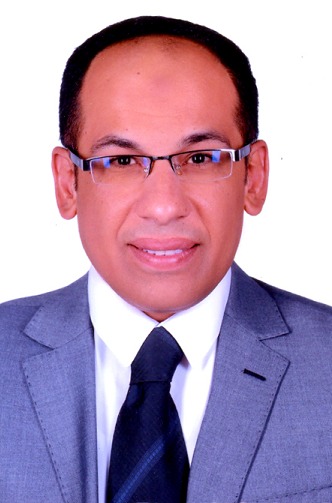
Prof. Dr. Ahmed Fouad Ali
Professor of Artificial Intelligence, Faculty of Computers and Informatics, Suez Canal University, Ismailia, Egypt. Dean, Faculty of Information Technology and Computer Science, Sinai University, Kantara Branch.The Role of Generative AI in Scientific Research
Ahmed Fouad Ali
Professor of
Artificial Intelligence, Faculty of Computers and Informatics, Suez Canal
University, Ismailia, Egypt.
Dean, Faculty of Information Technology and Computer Science, Sinai University,
Kantara Branch.
1
Introduction
In recent
years, generative artificial intelligence (GenAI) has emerged as a
transformative force across various domains, including scientific research.
GenAI can assist researchers in generating literature reviews, drafting
research proposals, synthesizing large volumes of data, and identifying novel
patterns or solutions that may not be immediately apparent to human scientists.
Moreover, generative models such as large language models (LLMs) are
increasingly being integrated into laboratory workflows, enabling rapid idea
generation, code automation, and even collaborative scientific writing. This
talk explores the expanding role of generative AI in the scientific process,
its benefits and limitations, and the implications for the future of research
and innovation.
2
Outline
•
Definition of Generative AI (GenAI).
•
Gen AI and Discriminative AI.
•
Top Large Language Models.
• Foundation Models.
• Fine Tuning.
• Retrieval Augmented Generation (RAG).
• Prompt Engineering.
• Gen AI applications in Scientific Research.
3 Summary
Generative AI (GenAI) is revolutionizing scientific research by enabling
the creation of literature reviews, research proposals, and data synthesis,
while uncovering novel patterns and solutions. Tools like large language models
(LLMs) are being integrated into lab workflows to support idea generation, code
automation, and collaborative writing. As GenAI continues to evolve, it offers
significant benefits but also raises challenges related to accuracy, ethics,
and reliability. This talk examines GenAI’s growing impact on research
practices and the future of scientific innovation.
4
Biography
Dr. Ahmed Fouad Ali received his B.Sc., M.Sc., and Ph.D. degrees
in Computer Science from Assiut University in 1998, 2006, and 2011,
respectively. He was a postdoctoral fellow at Thompson Rivers University,
Kamloops, BC, Canada, for one year. He is currently a Professor at the Faculty
of Computers and Informatics, Suez Canal University, Ismailia, Egypt, where he
previously served as Head of the Computer Science Department. He also served as
Vice Dean for Education and Student Affairs at the Egyptian Chinese College for
Applied Technology, Suez Canal University.
Currently, Dr. Ali is the Dean of the Faculty
of Information Technology and Computer Science at Sinai University, Kantara
Branch.
He has served as a technical program committee
member and reviewer for numerous international conferences and journals.
Dr. Ali's research interests include swarm intelligence and its applications,
optimization, machine learning, data mining, web mining, and artificial
intelligence. He has published extensively in international journals, book
chapters, and conference proceedings. In addition, he has shared many of his
lectures on the SlideShare platform.
WhatsApp Support
AI Conference Support
Online now
AI Conference Agent